
Fury
By Paige Collier
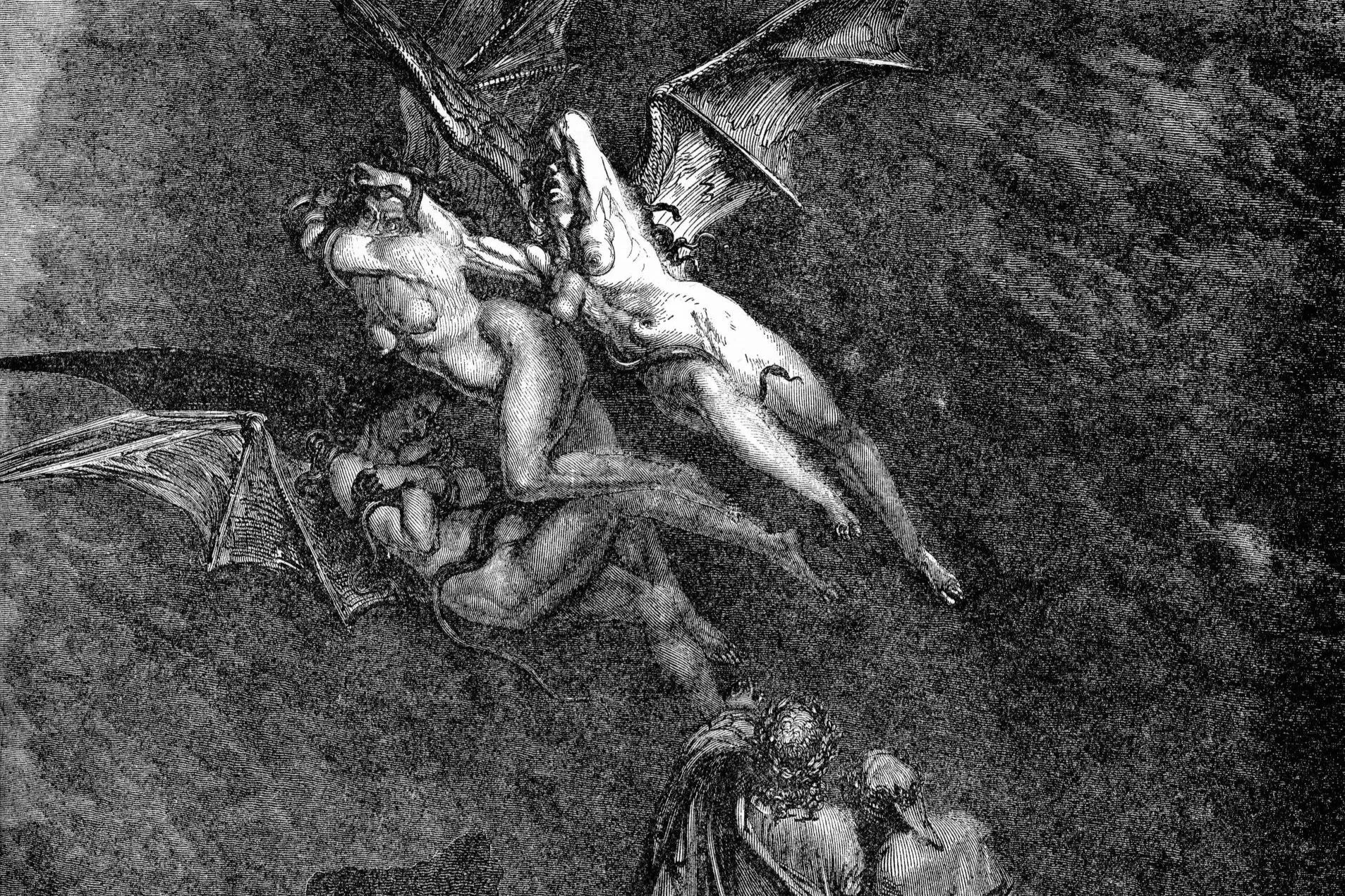
Gustave Doré, Megaera, Tisiphone, and Alecto (1857), engraving detail, courtesy of Wikimedia Commons
Author’s Note: This poem is inspired by The Eumenides, the play that ultimately influenced the final topic for my undergraduate thesis. It depicts the Furies, the three female goddesses of angry memory, avenging Clytemnestra, who was slain at the hands of her son Orestes. Orestes, believing himself in the right for avenging his father, Agamemnon, who was murdered by Clytemnestra, defends himself in the very first legal trial of Athens, where Athena is the judge. The Furies, demanding justice for Clytemnestra, and Orestes, demanding justice for Agamemnon, go head-to-head in a debate about honor, morality, and justice. But the inspiration here is the fact that Clytemnestra has representation and a chance for justice at all, an occurrence that was uncommon for women in Classical Athens.
In shadowed halls where silence clung to stone,
The Erinyes rose to claim their own.
From blood once spilled and oaths torn apart,
They carried laws not yet written, that of the heart.
Not gentle gods, but memory given form,
They howled for justice and came in like a storm.
Each whispered curse, each cry the world denied,
They gathered together and fought in stride.
Then came the court, beneath Athena’s gaze,
Where mortal men would speak in their measured phrase.
The first great trial, voices split in two,
Moral laws of Earth, now something strange and new.
There stood a son judged for his mother’s blood,
While reason tried to stem the ancient flood.
Yet the Eumenides, fierce in rightful claim,
Spoke for the silenced, called out the hidden shame.
What court could hear cries they carried long?
Whose verdict to declare wholly wrong?
For in their wrath, a truth the city knew:
When justice for women fails, these gods pursue.